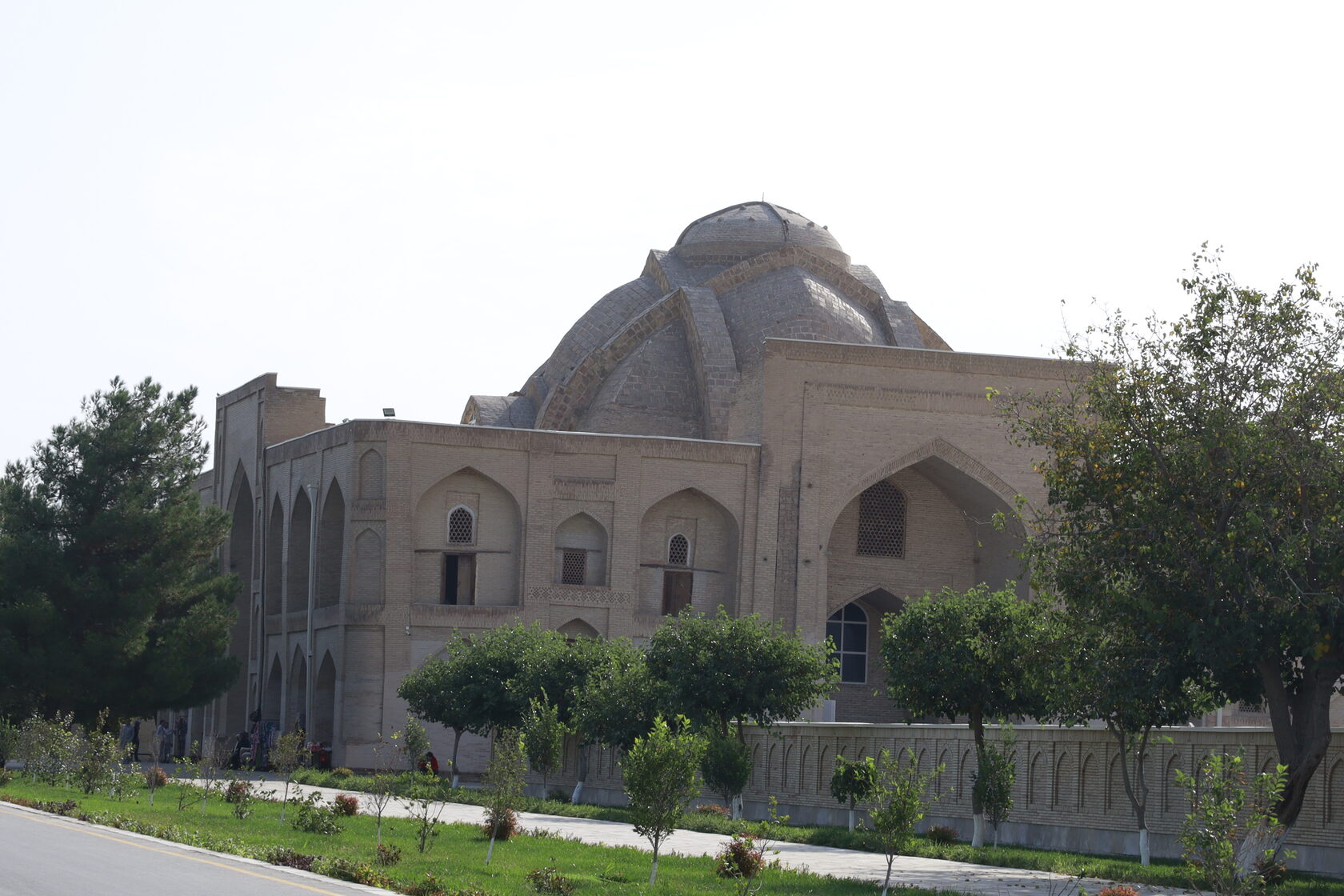
Imagine: pre-dawn Bukhara, a light mist hovering above Lyabi-Hauz, and you standing beside a modest grey dahma in the complex of Bahauddin Naqshband Complex. There are no crowds of pilgrims, no guides with microphones. Only you, your private spiritual mentor — a sheikh — and the wind that seems to whisper the names of the Seven Pirs, the “holy masters” of Bukhara.
Here, where the great Sufi master was born more than 700 years ago, time appears to stop. This is not a museum visit. It is a living encounter with the mystical heart of the Silk Road. And such an experience is possible only with Xanaka.
Sufism in Uzbekistan is more than a religious movement. It is a philosophy that helped Islam take root peacefully in the heart of Central Asia by blending with ancient Zoroastrian, shamanic, and Turkic traditions. Dervishes and saints did more than preach — they shaped history. They reconciled peoples, inspired rulers, preserved knowledge during times of war, and created entire spiritual orders (tariqas) that still influence the culture of the region today. Xanaka is the only tour operator organizing fully curated private Sufi journeys where visitors do not merely see mausoleums but experience the living tradition.
From Ascetics to Tariqas: The Birth of Sufism on the Silk Road
Sufism emerged in the 8th–9th centuries in Iraq and Syria as a protest against the luxury of the caliphate. The earliest Sufis (from the Arabic suf — “wool,” symbolizing ascetic clothing) sought direct and personal communion with God through dhikr, the continuous remembrance of Allah.
Along the Silk Road, the teachings spread rapidly eastward. By the 10th–11th centuries, the first khanaqahs — Sufi lodges — had appeared in Transoxiana (modern Uzbekistan).
By the 12th century three major Sufi orders defined the spiritual landscape of the region:
Kubrawiya
Founded in Khorezm by Najmuddin Kubra (1145–1221). His disciples were known for ecstatic spiritual practices and deep mysticism. Kubra himself died during the Mongol invasion of Khwarezmia, yet his order survived and influenced Sufi traditions across Central Asia.
Yasawiya
A Turkic Sufi order established by Ahmad Yasawi (1093–1166) in Turkestan. Yasawi introduced loud dhikr and vernacular forms of spirituality, making Sufi teachings accessible to ordinary people.
Naqshbandiya
The most influential order in Uzbekistan. Its founder, Bahauddin Naqshband (1318–1389), was born in the village of Qasri Orifon. He taught the practice of silent dhikr (khafi) — the remembrance of God within the heart — combined with honest work and service to society. Naqshband rejected outward displays of asceticism and ecstatic rituals, emphasizing that the path to God lies within everyday life.
These Sufi orders played not only spiritual but also political roles. Sufi sheikhs advised rulers such as Timur and Ulugh Beg, mediated conflicts between tribes, preserved libraries during wartime, and helped spread Islam among nomadic peoples.
The Seven Pirs of Bukhara — The Spiritual Axis of the Region
A special place in Uzbek Sufism belongs to the Seven Pirs (Khajagan-Naqshbandiya) — seven revered spiritual masters whose mausoleums form a symbolic path of spiritual perfection around Bukhara.
They include:
- Abdulkhaliq Ghijduwani
- Muhammad Arif Revgari
- Mahmud Anjir Faghnawi
- Ali Ramitani
- Muhammad Baba Samasi
- Sayyid Amir Kulol
- and finally Bahauddin Naqshband
The Bahauddin Naqshband Complex is the main shrine. Quiet dhikr gatherings are still held here. Xanaka organizes private evening visits when guests can meditate near the sacred tomb and listen to stories told by descendants of Sufi lineages — moments inaccessible to ordinary tourists.
In Khorezm, the Kubrawiya order flourished. The mausoleum of Najmuddin Kubra in Konye-Urgench remains a powerful spiritual site where Sufis still gather.
Meanwhile, the influence of Yasawiya traditions can be found in the Fergana Valley and Samarkand, where loud dhikr ceremonies accompanied by Karnay shaped elements of local culture.
A little-known fact: Sufism in Uzbekistan preserved pre-Islamic elements. Zoroastrian motifs appear in the ornamentation of khanaqahs; shamanic practices survive in healing rituals; even early Christian symbols can be found in certain manuscripts. Sufi masters skillfully synthesized traditions, making Islam deeply rooted in local culture.
Hidden Ziyarat Sites and Secret Rituals
Most guidebooks highlight only the famous monuments — the complex of Bahauddin Naqshband Complex, the mausoleum of Ahmad Yasawi in Turkestan, or the shrine of Qutham ibn Abbas at Shah-i-Zinda in Samarkand.
But the true treasures lie behind closed doors.
Xanaka works with hereditary sheikhs and local spiritual mentors to offer:
- Private ziyarat journeys to little-known khanaqahs near Bukhara and in the Nuratau Mountains
- Participation in silent Naqshbandi dhikr (no photography, no crowds)
- Meetings with masters of Sufi poetry and calligraphy in private family homes
- Night meditations at the tomb of Pahlavon Mahmud in Khiva or among the ruins of ancient lodges in Karakalpakstan
These experiences transform the way visitors perceive Uzbekistan. You are not simply a tourist — you become part of a living tradition that has endured for more than 800 years.
Why Sufism Matters Today
In the 21st century, Sufism is experiencing a revival. Between 2017 and 2020, international gatherings of Naqshbandi followers from 18 countries were held in Bukhara, as Uzbekistan positions itself as a center of the “Spiritual Silk Road.”
However, mass tourism often erodes the atmosphere of sacred sites.
Xanaka addresses this by organizing small groups of 6–10 people, guided by historian-scholars trained in Sufi studies. Guests stay in comfortable boutique hotels near sacred locations and travel during the quieter seasons, allowing a deeper and more authentic immersion into the spiritual heritage of Uzbekistan.